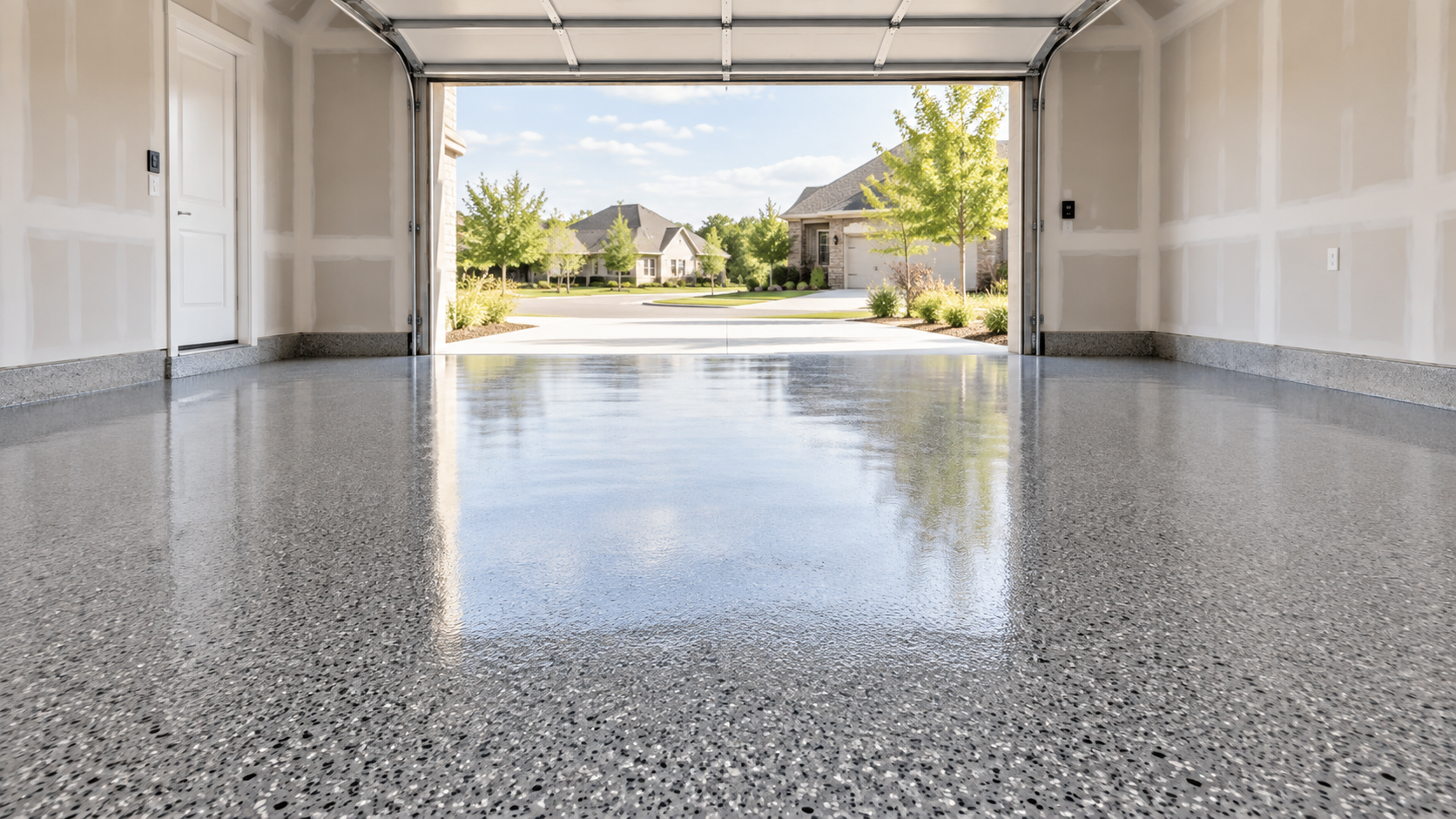
How Long Does a Garage Floor Coating Actually Last in McKinney, TX?
If you are weighing a professionally coated garage floor against leaving the concrete as-is, or against repeating a basic floor paint job that already wore out, the real question is simple: will it still look and perform the way it does today in five years, or in fifteen?
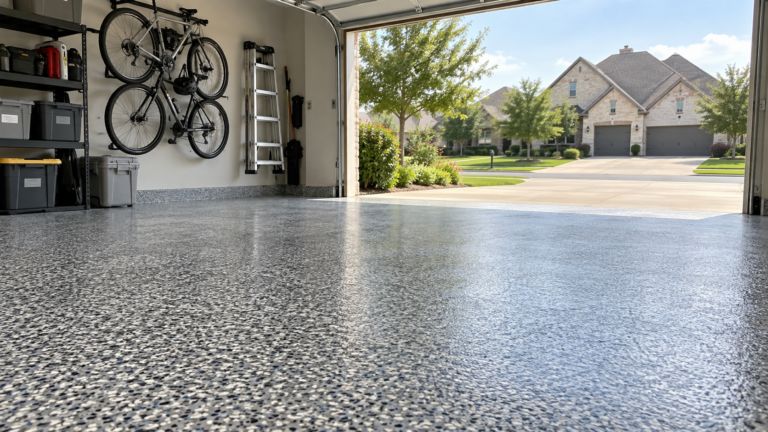
There is no single lifespan figure that applies to every coating system. For our polyurea coatings specifically, the answers we give to the most common garage floor questions put routine-care service life at 15 to 20 years or more, with results varying by surface condition, usage, and maintenance. Epoxy and polyaspartic are different products with different cure behavior, so that same range should not be assumed for every system. The realistic number for any floor depends on which coating is installed, the condition of the concrete, how well it was prepped, how much sun and heat it takes on, and how consistently it gets cleaned.
✓ Installation quality is the biggest factor, by far.
✓ Texas heat puts real strain on the coating, not just the concrete.
✓ Garages, patios, and pool decks age on different timelines
✓ Moisture inside the slab shortens service life before you ever see a problem.
✓ Commercial and industrial floors face different wear patterns.
✓ Early failure is not the same as normal aging.
✓ When a floor needs a professional look, not a guess
Installation Quality Is the Biggest Factor, By Far
A coating system is only as good as three things working together: the concrete underneath it, the way it was installed, and how it gets used afterward. Two floors using the same product can have very different lifespans if one slab had a moisture problem or a poor surface profile going in, which is why a real answer to “how long will mine last” starts with the concrete itself, not the product label.
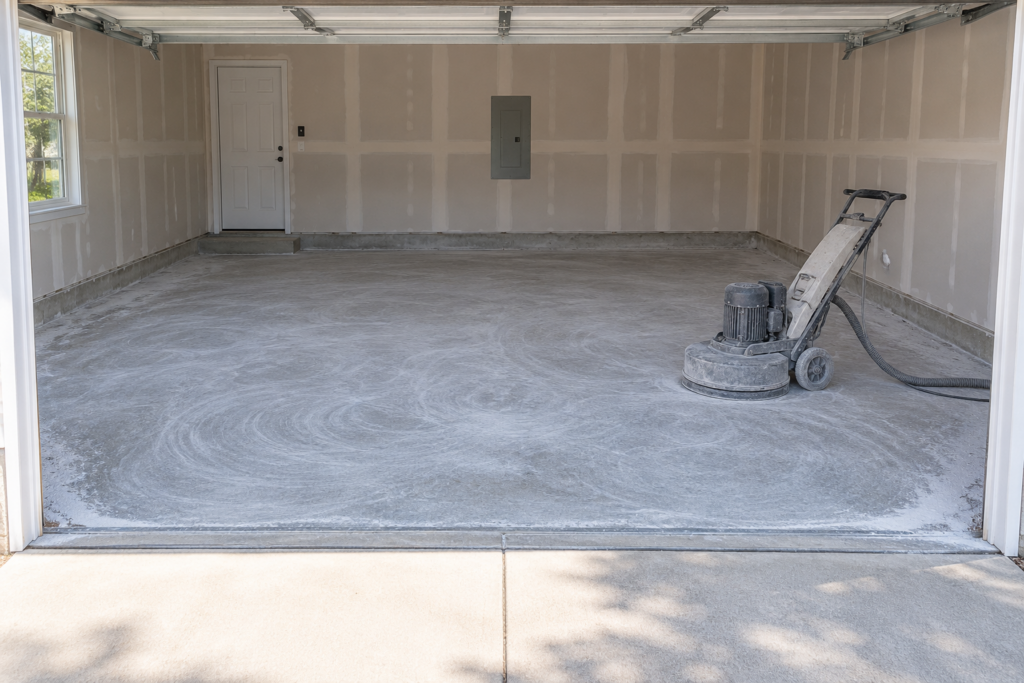
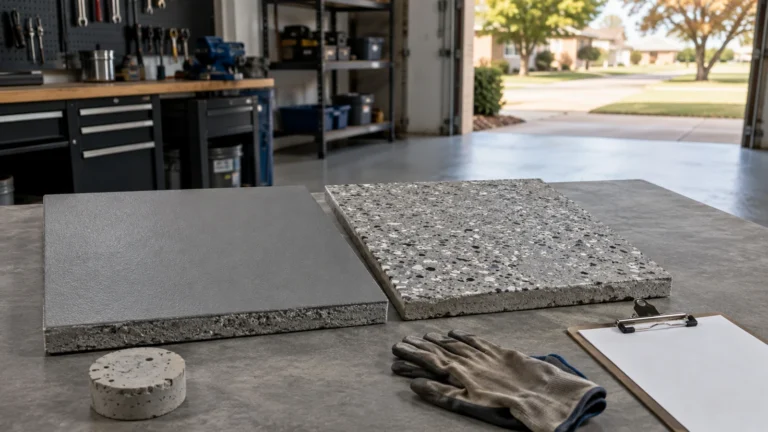
Coatings fail early far more often because of what happened before the coating went on than because of the coating material itself. Diamond grinding the slab, chasing and filling cracks, and confirming the concrete is dry enough to bond all happen before a drop of coating gets applied. Skip or rush any of that, and even a premium product will not perform for as long as it should. This is the same process behind how a residential garage floor gets prepped and coated: grind the slab, repair the damage, lay the base coat, broadcast the flake or color system, and finish with a topcoat. A base coat over dust or leftover residue will not bond the way it would over a properly ground surface, no matter how good the topcoat is.
Texas Heat Puts Real Strain on the Coating, Not Just the Concrete
North Texas summers still matter here, even though not every year looks the same. The National Weather Service’s Fort Worth office records 100-degree days in many summers, though the annual total varies considerably, from a handful in a mild year to several dozen in a hot one. An outdoor patio or pool deck sits in that heat continuously, while an enclosed garage stays more shielded from direct sun, though it still deals with high ambient heat and with hot surfaces, such as tires, resting on the floor after a drive.
Manufacturers use standardized ultraviolet exposure testing to evaluate how materials change under controlled UV light, moisture, and heat. The test does not predict an exact number of years outdoors, but it helps compare material performance under defined conditions.
Hot Tire Pickup, Explained Carefully
Hot tire pickup describes lifting, marking, softening, or coating transfer where a warm tire sits on the floor. The cause is not the same in every case: it can involve a coating not well suited to the application, insufficient cure time before vehicles returned, weak adhesion to the slab, surface preparation issues, heat exposure, or some combination of these. Because different causes can look similar on the surface, a professional evaluation is often the most reliable way to tell a cosmetic mark from an adhesion problem worth addressing.
Garages, Patios, and Pool Decks Age on Different Timelines
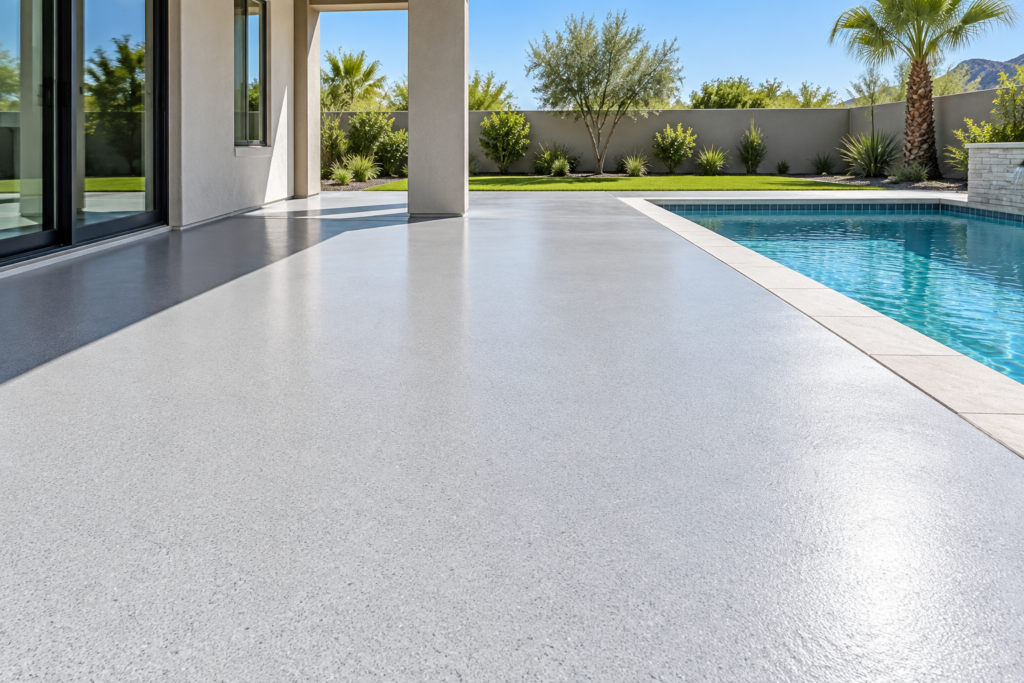
A garage floor spends most of its life shielded from direct sun, only briefly exposed when the door is open. An outdoor patio or pool deck does not get that break. It sits under sun for years, takes on rain and irrigation water, and cycles between a hot afternoon and a cool morning almost daily. That is why outdoor polyaspartic and epoxy systems built for patios and pool decks are not simply a garage product moved outside. The exposure is more constant, so topcoat UV stability and slab drainage matter more, and a homeowner comparing the two should expect the patio to face tougher conditions year over year, even with a comparable product.
Moisture Inside the Slab Shortens Service Life Before You Ever See a Problem
Some of the most damaging conditions for a coated floor are invisible on install day. Concrete is porous, and a slab in contact with soil can carry moisture that moves upward over months or years, a process installers sometimes call vapor drive. Trapped under a coating applied before the slab was properly evaluated, that moisture can weaken the bond from underneath long before any visible sign shows up on the surface. A recognized method for measuring relative humidity inside a concrete slab uses probes at a specific depth rather than a surface guess, and a slab that tests within an acceptable range has a better shot at reaching the upper end of a coating’s expected lifespan.
Commercial and Industrial Floors Face Different Wear Patterns
A warehouse or production floor is not judged by the same standard as a residential garage. Forklift traffic, chemical exposure, and constant equipment movement create wear patterns a two-car garage never sees. Heavy duty commercial and industrial flooring systems get chosen and installed with that traffic in mind, often prioritizing impact and chemical resistance over decorative flake finishes. A showroom floor with light foot traffic will likely outlast a loading dock hit by pallet jacks daily, even with a similar coating, simply because the physical stress is not comparable.
Early Failure Is Not the Same as Normal Aging
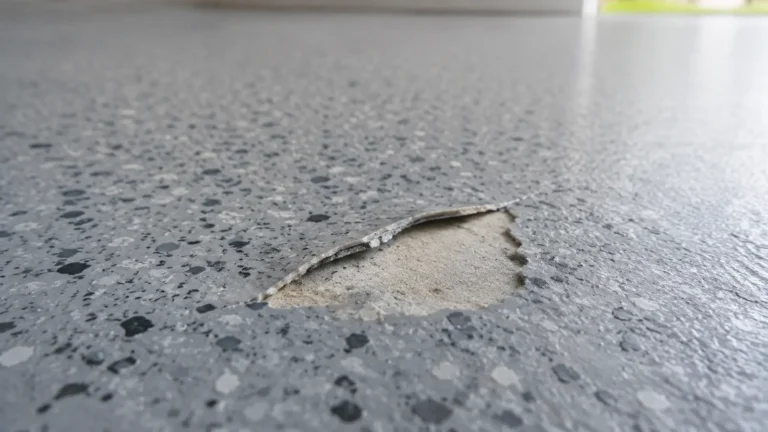
It matters to separate two different situations: a floor naturally reaching the end of a long service life, and a floor that failed early because of a problem with prep, product, or application. A coating that dulls gradually after a decade or more of daily use is aging the way any surface does. A coating that bubbles, lifts, or peels within the first year or two is showing a different kind of problem, usually tied to moisture, surface prep, or application conditions rather than simple wear.
If your floor is starting to peel well before it should, that is worth diagnosing on its own, since the cause and the fix differ from ordinary wear at the end of a coating’s expected life.
When a Floor Needs a Professional Look, Not a Guess
A homeowner can track obvious wear: fading color, thinning gloss, or a rough patch where something heavy sits often. What is harder to judge without training is whether a slab has a moisture issue, whether an old coating underneath is compatible with a new one, or whether cracking points to a settling problem below the surface. Any of those calls for an on-site look before assuming a simple recoat will solve it.
Getting the Most Years Out of Your Floor
The floors that reach the long end of their expected lifespan tend to share three things: a slab that was properly evaluated and prepped before coating, a product suited to how the space actually gets used, and an owner who sweeps and mops it instead of ignoring it. Much of what determines whether a floor performs well over many years happens before the first coat ever goes on.
If you want a realistic lifespan estimate for your own garage, patio, or commercial space, the most useful next step is an on-site look at the concrete itself. Give us a call at 469-525-1131 or request a free estimate to talk through what your specific slab and conditions would mean for a coating system.
About Alliance Direct Services
Alliance Direct Services is a McKinney, Texas-based coating contractor serving residential and commercial clients across the DFW metro, including McKinney, Frisco, Allen, Plano, and Prosper. The company provides garage, patio and outdoor, and commercial and industrial floor coating services, with preparation and material selection based on each floor’s condition and use.
If you are deciding between systems for a garage, patio, or commercial space, the most useful next step is an on-site look at the concrete, its condition, how the space will be used, and its weather exposure.
CONTACT ALLIANCE DIRECT SERVICESFrequently Asked Questions
How long does a garage floor coating actually last?
There is no single answer for every system. For our polyurea coatings specifically, our FAQ page cites 15 to 20 years or more of service life with proper installation and routine care. Epoxy and polyaspartic systems cure and perform differently, so that figure should not be assumed for every product. The realistic number depends on which coating is used, surface condition, and how consistently the floor is maintained.
What shortens a coated floor’s life the most?
Skipped or rushed surface preparation and hidden moisture in the slab are two of the most common causes of early failure, and both happen before the coating is ever applied.
Does Texas heat affect these floors more than a milder climate would?
It can, though the effect varies by year and by exposure. Extended stretches of triple-digit heat raise UV exposure and surface temperatures, which stress a coating more than a cooler, cloudier climate would. An enclosed garage feels less of that than an outdoor patio or pool deck in direct sun.
What is hot tire pickup?
It is lifting, marking, softening, or coating transfer where a warm tire sits on the floor. The cause varies case to case: an unsuitable coating, insufficient cure time, weak adhesion, surface preparation issues, or heat exposure. A professional evaluation can help tell a surface mark from a deeper adhesion problem.
Does a patio or pool deck coating last as long as a garage floor coating?
Not automatically. A patio or pool deck sits in sun and weather year-round, while a garage floor stays more shielded from both, so comparable products can still show different wear timelines.
How can I tell if my floor is nearing the end of its service life versus failing early?
Gradual fading, thinning gloss, and light surface wear after many years of daily use point to normal aging. Bubbling, lifting, or peeling within the first year or two points to a separate problem worth diagnosing on its own.
Does regular cleaning actually make a measurable difference?
Regular sweeping and occasional mopping remove grit that can dull the surface and keep chemical residue from sitting on the coating longer than it should. It will not fix a prep or moisture issue, but it helps a well-installed floor reach the upper end of its expected lifespan.
Is a thicker coating automatically a longer-lasting one?
Not by itself. Thickness matters less than whether the system, the surface prep, and the cure conditions were all matched correctly to the space. A thick coating over an unprepared or damp slab can still fail earlier than a properly specified system applied correctly.