Why garage floor coatings peel in McKinney, TX
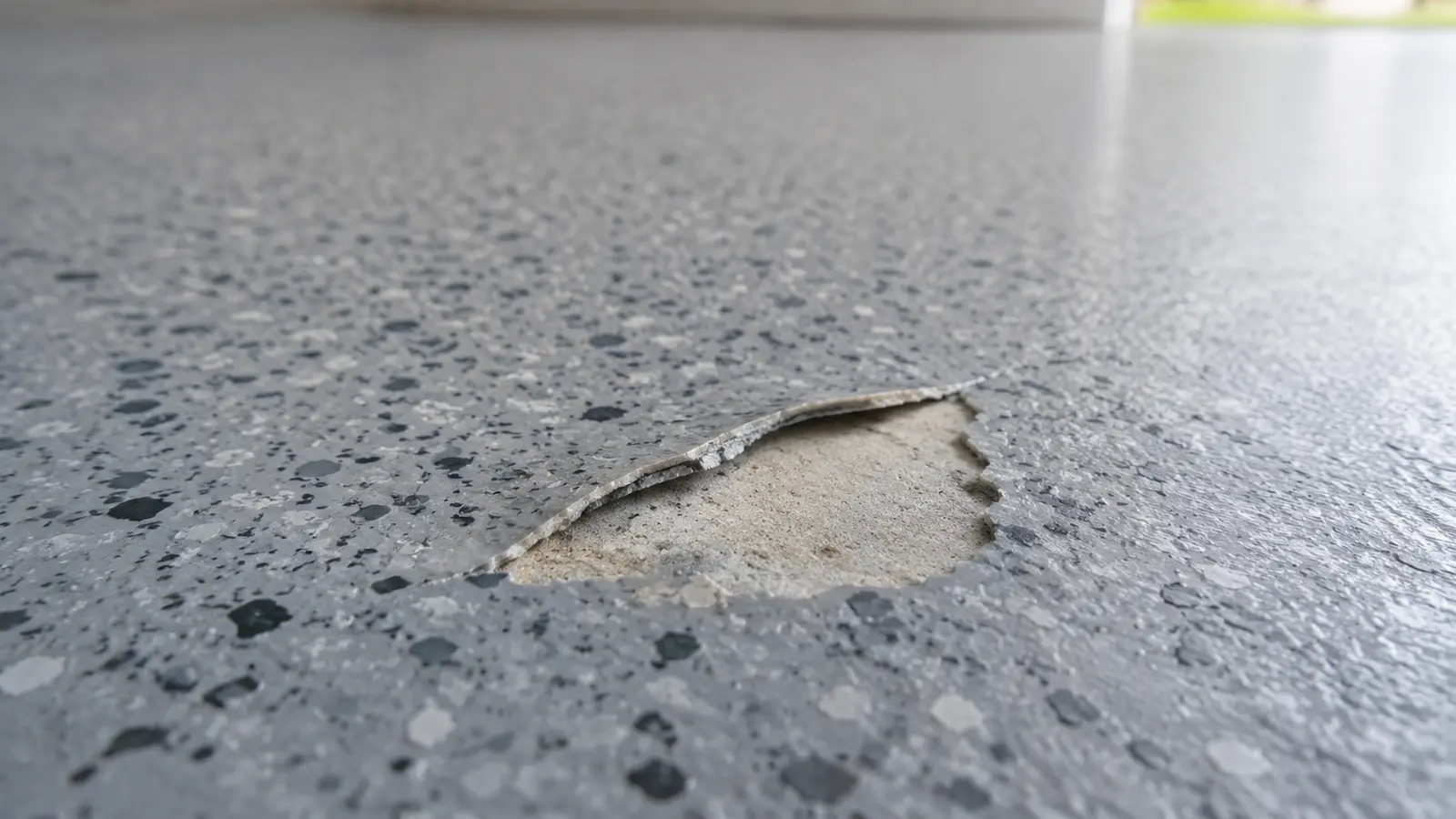
Garage floor coating peeling usually indicates an adhesion failure between the coating system and the concrete or between coating layers.
Garage floor coating peeling usually indicates an adhesion failure between the coating system and the concrete or between coating layers. Common causes include excess moisture, inadequate surface preparation, application outside product requirements, incorrect mixing, or incompatible materials. In some cases, the coating itself or the concrete surface may also fail, so the cause should be evaluated before deciding whether to repair or remove the system.
Why peeling deserves a closer look
When garage floor coating peeling appears, the visible damage does not reveal the cause by itself. Homeowners and facility managers may notice bubbling, flaking, or sections of coating lifting from the concrete, but several different conditions can produce similar symptoms.
This guide explains the most common causes of peeling, how to evaluate whether a floor may be repairable or needs full removal, and what to ask a contractor before hiring one.
Peeling often relates to conditions before or during installation. However, failure can also occur within the coating material or the concrete surface. Understanding the possible failure points helps property owners evaluate the problem without automatically assigning fault to the product, installer, or substrate.
Peeling usually points to an adhesion failure
A coating system relies on a mechanical and chemical bond to the concrete. When the system includes multiple layers, it also depends on proper adhesion between those layers.
When one of these bonds fails, the coating may separate, bubble, flake, or peel. Separation often occurs between the coating and the concrete or between coating layers. However, the coating material or concrete surface may also contribute to the failure. That is why the cause should be evaluated instead of assumed from appearance alone.
Four common factors to consider are moisture in the slab, inadequate surface preparation, unsuitable application conditions, and product compatibility or mixing. More than one factor can contribute to the same failure.
What causes garage floor coating peeling?
Cause one: moisture in the concrete
Concrete is porous. Slabs in contact with the ground can contain or transmit moisture over time. If the moisture condition exceeds what the selected coating system can tolerate, it may interfere with adhesion or contribute to bubbling and peeling.
The effects may not appear immediately. A floor can look acceptable after installation and develop visible problems weeks or months later.
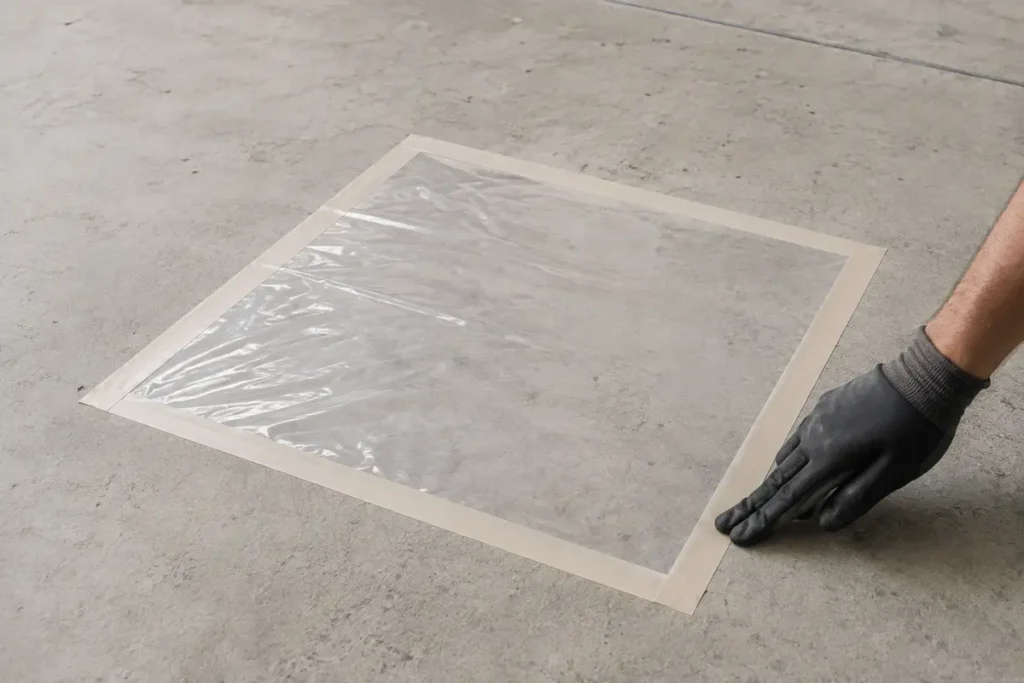
ASTM D4263 describes the plastic-sheet method for indicating the presence of capillary moisture in concrete before coating. It is a screening method, not a complete diagnosis of every possible moisture condition. The installer should use the testing method and acceptance limits required for the specific coating system and slab.
Moisture evaluation should therefore be matched to the concrete, site conditions, and product requirements rather than treated as a single universal test.
Cause two: inadequate surface preparation
Concrete surfaces may contain weak laitance, dust, sealers, oil, or remnants of older coatings that interfere with adhesion. ASTM D4259 covers abrasive preparation used to remove weak surface material and contaminants and create a suitable concrete profile before coating. Mechanical diamond grinding is one method contractors may use to perform this preparation.
The goal is not simply to make the floor look clean. The surface must be prepared so the selected coating system can bond to suitable concrete.
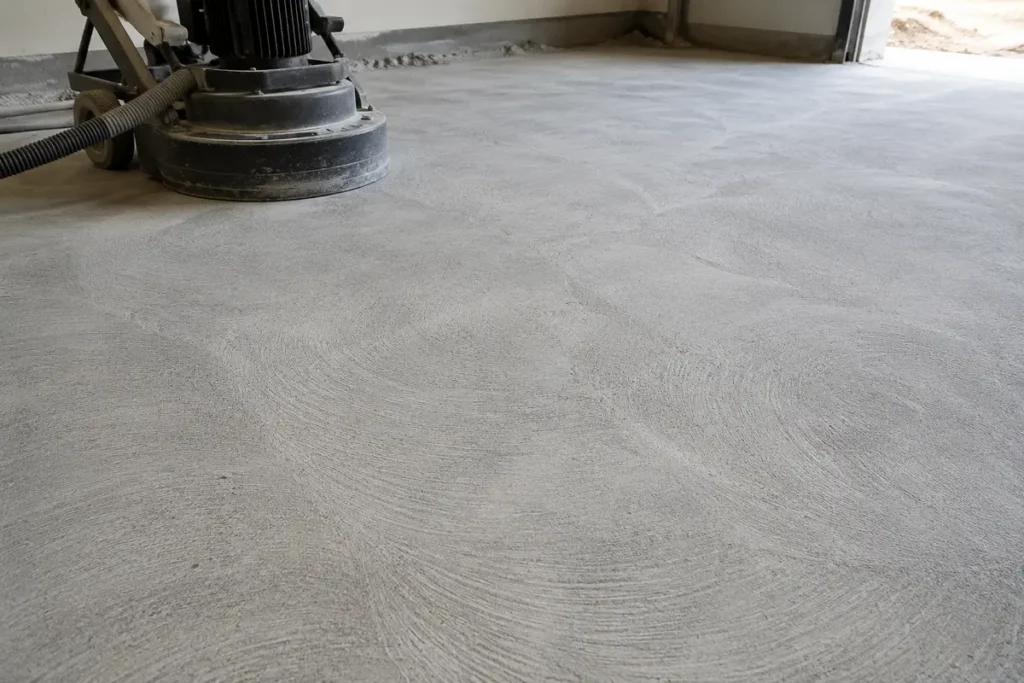
Inadequate preparation can contribute to early garage floor coating peeling. A coating applied over an unprepared or improperly prepared surface may initially look acceptable but fail later because contaminants, sealers, or weak surface material interfere with adhesion.
The appropriate preparation method depends on the condition of the slab, any existing coating or sealer, and the requirements of the product being installed.
Cause three: application conditions and cure time
Coating products must be mixed, applied, recoated, and cured according to the manufacturer’s requirements. Temperature, humidity, slab conditions, and product-specific working times can affect how a coating flows, bonds, and hardens.
Applying a coating outside its permitted temperature or humidity range may affect its performance. Coating concrete before the slab has reached the condition required by the product can also cause problems.
Recoat windows and cure times matter as well. Applying another layer outside the specified recoat window may interfere with adhesion between layers. Allowing foot or vehicle traffic too soon can mark, damage, or compromise the uncured system before it reaches its intended service properties.
The realistic cure and return-to-service time depends on the product, slab, and installation conditions. A fixed timeline should not be assumed for every project.
Cause four: product mismatch or incorrect mixing
Many professional epoxy and polyurea coating products are supplied as two-component systems. These components must be combined using the ratio, mixing procedure, working time, and application method specified by the manufacturer.
Incorrect measuring or incomplete mixing can leave portions of the coating that do not cure as intended. Depending on the product and type of error, this may appear as soft areas, uneven performance, poor intercoat adhesion, or peeling.
Compatibility is another consideration. Not every primer, base coat, decorative layer, and topcoat is designed to work together. Applying a new product over an old or unidentified coating without confirming compatibility can cause separation even when the individual products are not defective.
A complete coating system should therefore be selected and installed according to compatible product requirements rather than assembled from unrelated materials.
Can a peeling floor be repaired, or does it need a full redo?
The appropriate response depends on the cause, location, and extent of the failure. Some small, isolated failures may be evaluated for local repair, but suitability depends on the condition of the surrounding coating, the underlying cause, and the system originally installed.
Before any garage floor coating peeling is repaired, the failed area and surrounding coating should be evaluated. A small visible spot does not necessarily prove that the problem is limited to that location.
Widespread separation, extensive loss of adhesion, or an unresolved moisture condition may require removal of the failed system, correction of the underlying condition where possible, new surface preparation, and installation of a suitable replacement system.
Applying a new coating directly over loose or peeling material without correcting the underlying cause can lead to another failure.
When the failure point is unclear, a pull-off adhesion test such as the one described in ASTM D7234 can help measure how well a coating is bonded at the tested location. Separation during this type of test may occur:
- Between the coating and the concrete
- Between coating layers
- Within the coating
- Within the concrete surface
- At the test adhesive
Because this is a destructive spot test, the tested area may need a small repair afterward. The test result must also be interpreted in the context of the coating system and substrate.
What proper installation looks like
Good installation begins with evaluating the slab and following the requirements of the selected coating system.
Depending on the slab and product, the process may include:
- Appropriate moisture evaluation
- Removal of contaminants, sealers, or failed coatings
- Mechanical surface preparation
- Repair or treatment of applicable concrete defects
- Compatibility checks between coating layers
- Accurate measuring and mixing
- Compliance with application and recoat windows
- Adequate cure time before returning the floor to service
These considerations apply to garage floors, patios, and commercial or industrial floors. However, the required preparation and coating system can vary according to the substrate, exposure, intended use, and selected product.
Proper installation is not one identical procedure used on every slab. It is a process of matching the preparation, materials, application conditions, and cure requirements to the specific project.
Questions worth asking before you hire a contractor
If garage floor coating peeling is something you want to avoid on a new installation, ask contractors to explain their preparation and installation process before comparing proposals.
Useful questions include:
✓ How will you evaluate the concrete for moisture before starting?
✓ What does your surface preparation process involve?
✓ How will you determine whether an existing coating or sealer is present?
✓ How will failed coating material or surface contamination be removed?
✓ Are the primer, base coat, and topcoat designed to work together?
✓ What temperature and humidity requirements apply to the selected product?
✓ What is the realistic cure and return-to-service time for this project?
✓ Can you show me the technical data sheet for the product going on my floor?
A contractor who clearly explains the slab evaluation, surface preparation, product requirements, and testing appropriate to the project gives you a better basis for comparing proposals. Our FAQ page covers additional questions homeowners may want to consider before booking an estimate.
About Alliance Direct Services
Alliance Direct Services is a McKinney, Texas-based coating contractor serving residential and commercial clients across the DFW metro, including McKinney, Frisco, Allen, Plano, and Prosper.
The company provides garage floor, patio and outdoor, and commercial and industrial coating services.
Whether you are dealing with garage floor coating peeling or planning a new installation, the next step is to understand the condition of the concrete and coating system.
CONTACT ALLIANCE DIRECT SERVICESFAQ
Why did my garage floor coating start peeling months after it was installed?
Garage floor coating peeling that appears weeks or months after installation can have several causes. Moisture beneath the coating is one possibility, but surface contamination, weak concrete, application conditions, product compatibility, or adhesion between coating layers may also contribute. The timing and appearance alone are not enough to confirm the cause.
Is peeling always the coating manufacturer’s fault?
Not always. Preparation, moisture, application conditions, mixing, compatibility, the coating material, and the concrete surface can all affect failure. Visible peeling alone is not enough to identify responsibility, so the cause should be evaluated before fault is assigned.
Can I just apply a new coat over a peeling floor?
Not as a reliable fix. Applying a new layer directly over loose or peeling material without correcting the underlying cause can lead to another failure. The failed material should be evaluated, and the repair or removal approach should be matched to the cause and extent of the problem.
How do I know if my concrete has a moisture problem before I coat it?
Moisture cannot be evaluated reliably by looking at or touching the concrete alone. An installer should use the moisture-evaluation method and acceptance limits required for the selected coating system and slab. The plastic-sheet method described in ASTM D4263 is one screening method for indicating the presence of capillary moisture, but it is not a complete diagnosis of every moisture condition.
Does a more expensive coating always mean it is less likely to peel?
Not necessarily. Price may reflect the product, project scope, preparation requirements, warranty terms, labor, or company overhead. The compatibility of the coating system and the quality of the preparation and application are more relevant to adhesion than price alone.
Can weather during installation cause peeling later?
It can contribute to failure. Applying or curing a coating outside the manufacturer’s permitted temperature or humidity range may affect how it bonds and hardens, even if the problem is not visible immediately. Actual site conditions should be considered rather than assuming the same process and cure time apply throughout the year.
What is the difference between peeling and normal wear?
Normal wear generally appears as gradual dulling, scuffing, or light scratching at the surface. Peeling involves separation within the coating system or from the substrate and warrants evaluation to determine whether the failure is adhesive, cohesive, or related to the concrete surface.
Should I be worried if I see one small peeling spot?
A small spot is worth evaluating. Some isolated failures may be repairable, but a local symptom does not confirm that the problem is limited to that area. The surrounding adhesion and possible moisture or preparation issues should be checked before choosing a repair approach.