Flake Floor Coating in McKinney, TX: How It Works and Where It Makes Sense
If you are researching flake floor coating in McKinney, TX for a garage, patio, or commercial space, you have probably run into flake samples and marketing language that all sound the same. Decorative flake flooring is often called tough, custom, and low-maintenance, but the flake is only one part of the system. Surface preparation and the coating layers around it determine how the floor performs over time.
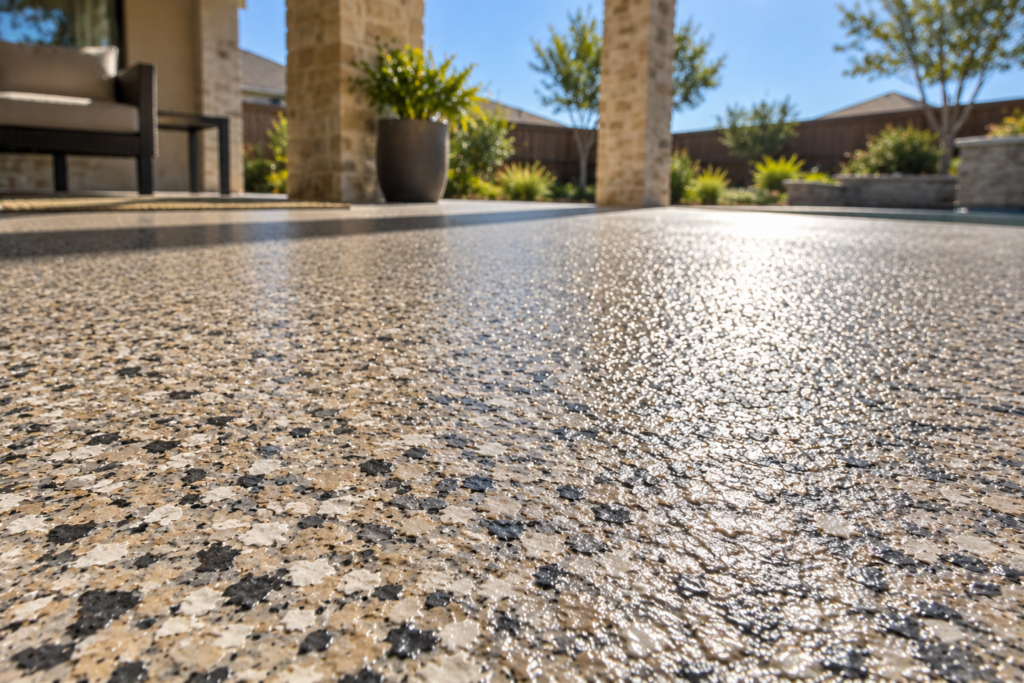
Decorative flake flooring is a colored vinyl chip finish broadcast into a wet base coat and sealed under a clear topcoat. The flake creates the look, but adhesion and durability depend on the full system: surface prep, base coat, and topcoat. It works well in garages, patios, and many commercial spaces, but it cannot fix a slab with unresolved cracking, moisture, or structural movement.
✓ Full versus partial broadcast
✓ What flake can and cannot fix
✓ When professional evaluation matters
✓ FAQ
What a Flake Floor Actually Is
Decorative vinyl flakes are lightweight, multicolored chips broadcast into a wet resin layer while it is still workable. On their own, they do not bond to concrete, resist chemicals, or hold up to hot tires. They are the decorative layer, not the structural one; the surrounding surface prep, base coat, and clear topcoat are what actually perform.
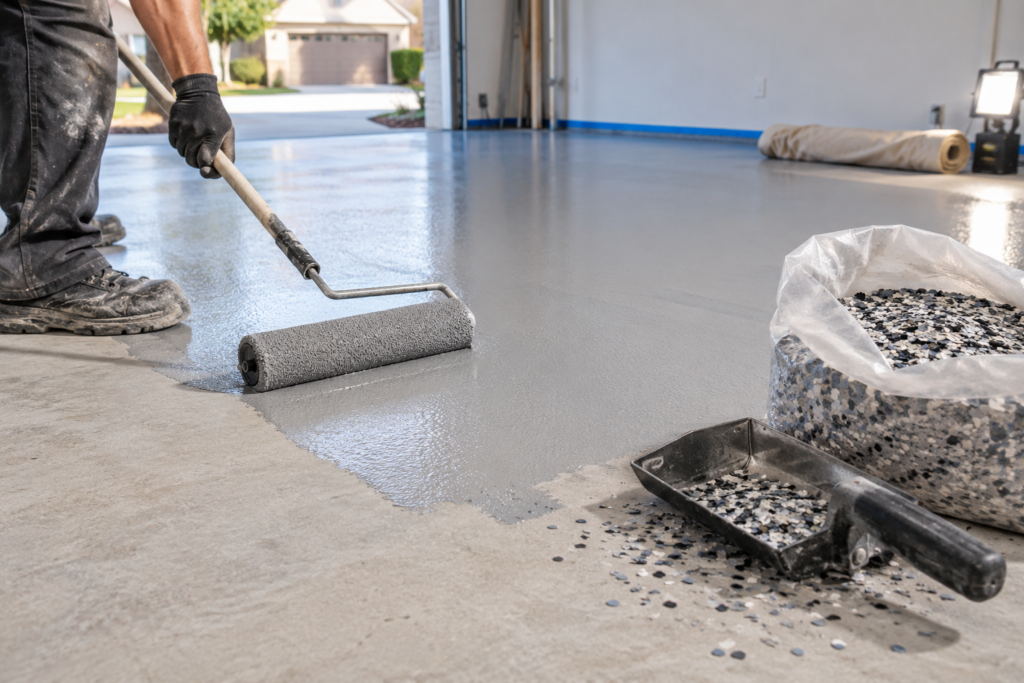
At Alliance Direct Services, a residential flake floor system follows five steps: diamond grinding, crack repair and surface restoration, a polyurea or epoxy base coat, the flake or color broadcast, and a polyaspartic topcoat for UV stability and chemical resistance. Each step has a specific role, and rushing or omitting one can lead to problems later.
Full Broadcast Versus Partial Broadcast
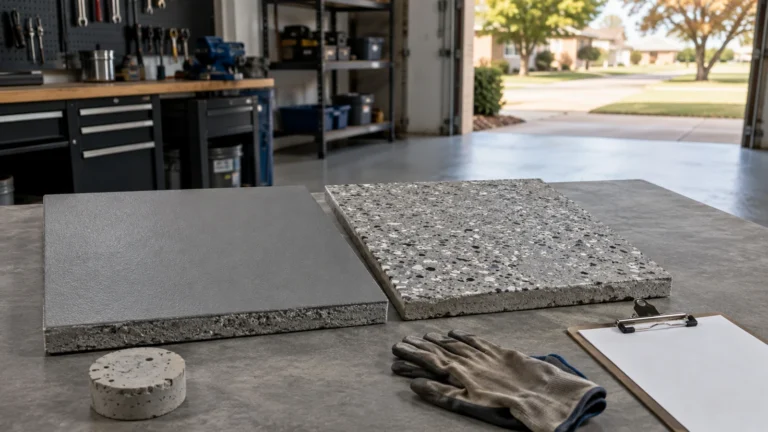
The broadcast method changes the look of the finished floor. A partial or random broadcast spreads flakes at a lighter rate, leaving some base coat color visible for a lighter pattern. A full broadcast, sometimes called broadcast to rejection, keeps adding flake until the coating is completely covered, producing a denser, uniform color that hides small concrete variations better.
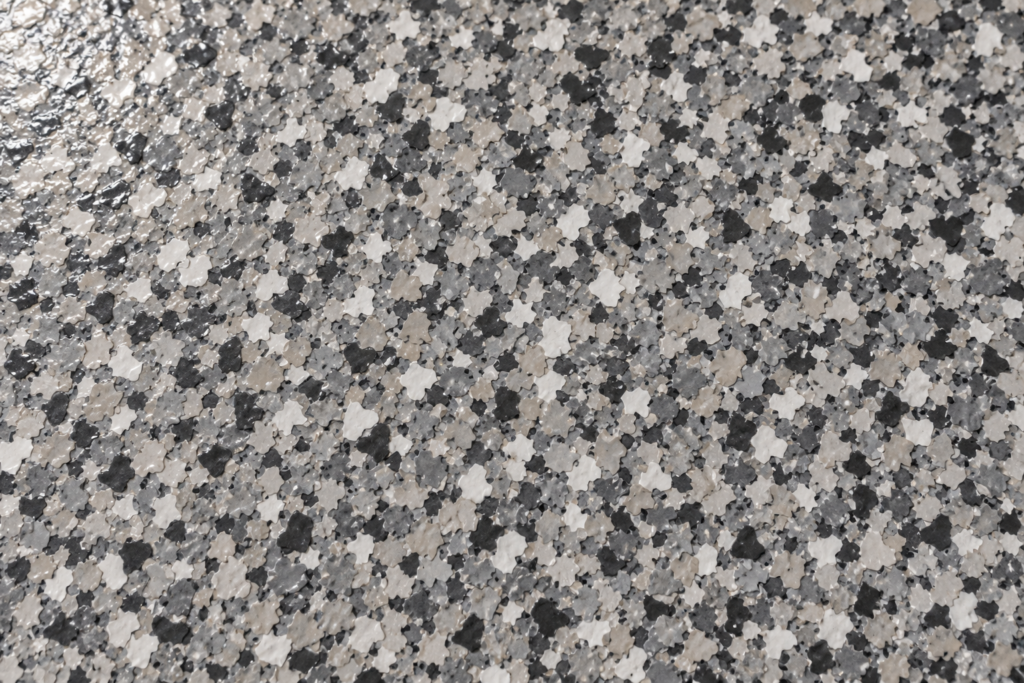
Neither approach fixes a poorly prepared slab: a heavy broadcast can soften minor cosmetic issues but will not hide a low spot or a patch that was not feathered into the surrounding surface. Broadcast density mainly changes coverage and appearance, not traction on its own.
Where Flake Flooring Makes Sense
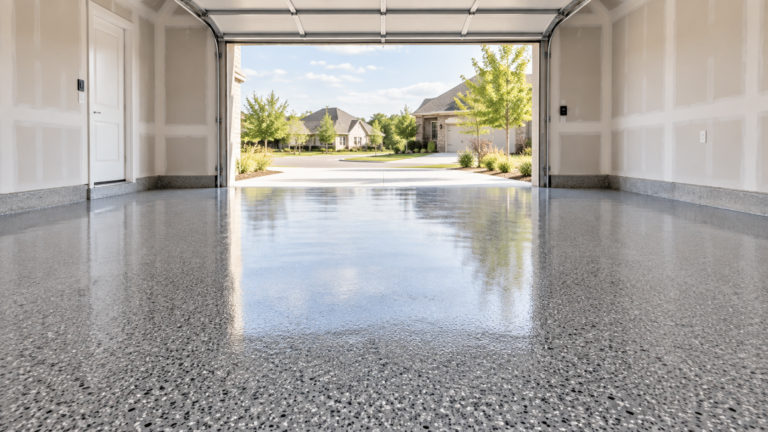
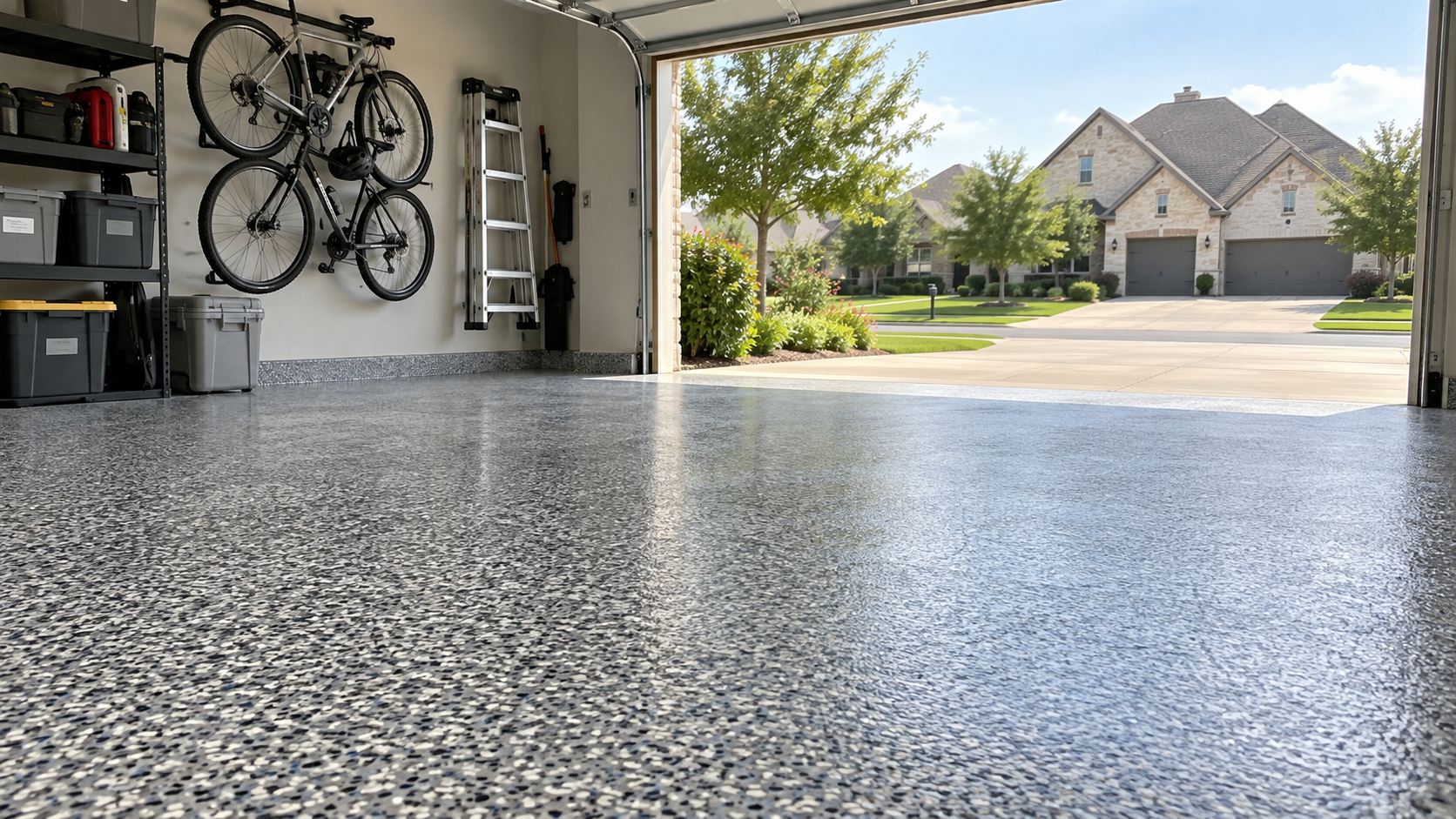
Garages remain the most common application. System selection should account for hot tires, dropped tools, vehicle-fluid spills, and everyday grime. Garage floor coatings follow a layered process, with the blend and topcoat chosen for how the space gets used.
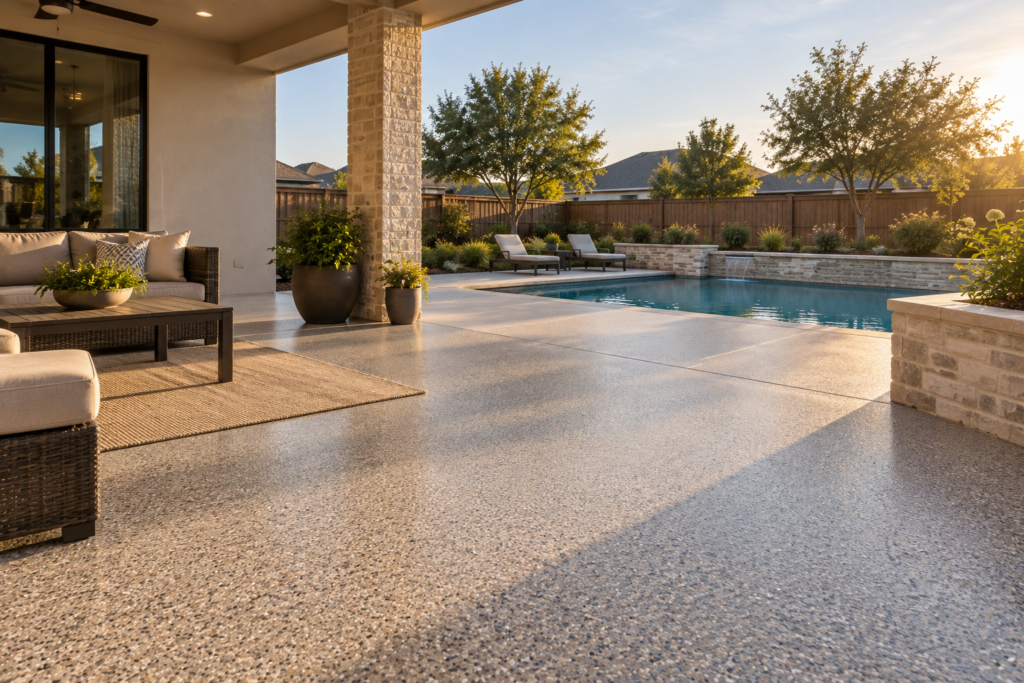
Patios and pool decks face direct sun, rain, and temperature swings that an interior slab does not. Patio and outdoor floor coatings can use a similar layered structure, but the base coat, topcoat, and complete assembly must be selected and rated for exterior exposure.
Commercial spaces bring their own demands: rolling carts, constant cleaning, and heavier traffic that can wear a finish thin at the entrances. Commercial flake flooring calls for a more deliberate spec, since traffic level, chemical exposure, and cleaning frequency all factor into the base coat, broadcast density, and topcoat combination chosen.
What Flake Can Fix, and What It Cannot
A flake system can soften minor discoloration, light surface wear, and small patch repairs. It cannot correct active structural cracking, ongoing settlement, or a drainage problem sending water where it should not go. Those issues need to be fixed before any coating goes down, not covered up. If a contractor proposes flake over a slab with a widening crack or a history of standing water, get a second opinion.
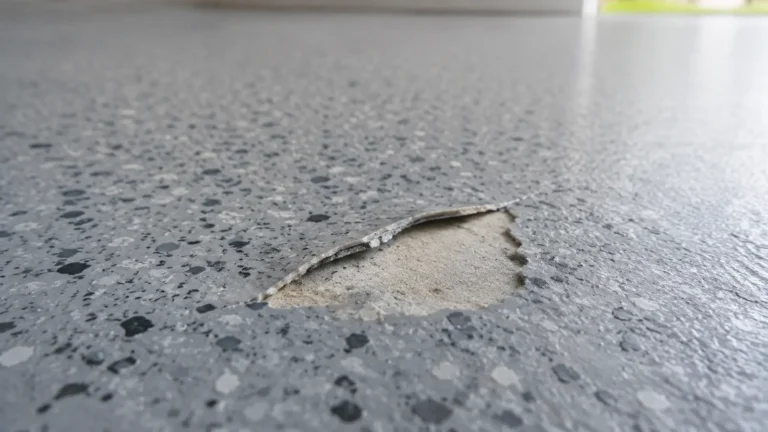
Surface preparation plays a major role in coating performance. Mechanical grinding removes weak surface material, old sealers, and contaminants that could block adhesion, while creating the profile needed for the base coat to bond. Skipping or rushing this step can contribute to premature peeling or bubbling.
Heat, Traction, and Other Texas-Specific Concerns
North Texas puts real demands on exterior and garage-adjacent coatings. The National Weather Service’s climate normals for Dallas-Fort Worth show roughly 20 days a year at or above 100 degrees, more than 37 inches of annual precipitation, and around 29 freezes per season. These conditions create added exposure demands, but product selection and slab evaluation still need to be based on the specific site.
Traction is where marketing language tends to get ahead of the facts. A flake floor is not automatically slip-resistant just because it has texture, and broadcast density alone does not decide it either. Finished traction comes from how the surface is scraped and sealed, the topcoat build, whether a traction additive is added, and ongoing cleaning. Federal guidance on accessible floor and ground surfaces requires accessible-route surfaces to be stable, firm, and slip resistant, a useful baseline though it sets no universal rating for every flake finish. If wet traction matters for your space, ask what was built in to manage it.
When a Professional Evaluation Matters More Than a Color Chart
It is easy to shop a flake floor by blend samples alone, but the more useful starting point is an honest look at the concrete itself. Moisture is one of the variables that gets missed most often: it can sit in a slab without being visible, and sealing over it before it is accounted for can cause bubbling or peeling months later, not on install day. Industry guidance on concrete slab moisture testing distinguishes surface moisture vapor emission testing from in-slab relative humidity testing, and notes that ambient temperature and humidity readings separately determine dew point, describing different conditions that should not be treated as interchangeable.
A short walk-through before any proposal should cover the slab condition, cracks or joints, drainage, and expected use, since that conversation determines which base coat, broadcast method, and topcoat combination will actually hold up.
About Alliance Direct Services
Alliance Direct Services is a McKinney, Texas-based coating contractor serving residential and commercial clients across the DFW metro, including McKinney, Frisco, Allen, Plano, and Prosper. The company provides garage, patio and outdoor, and commercial and industrial floor coating services, with preparation and material selection based on each floor’s condition and use.
Whether you are staring at a stained garage floor, planning a patio refresh, or planning a commercial flooring project, the right flake system starts with an honest look at the concrete you already have. Alliance Direct Services offers free on-site estimates across McKinney, Frisco, Allen, Plano, Prosper, and the surrounding DFW area. Call 469-525-1131 or request a quote online. Our FAQ page covers what homeowners and facility managers ask most.
CONTACT ALLIANCE DIRECT SERVICESFAQ
Is decorative flake flooring the same as epoxy flooring?
Not exactly. Flake is the decorative chip material, not the coating chemistry. It can be broadcast into an epoxy or polyurea base coat and sealed with an appropriate topcoat.
Can flake flooring go outside on a patio or pool deck?
Yes, when built and topcoated for exterior UV and weather exposure. Confirm the specific system is rated for outdoor use before assuming an interior product performs the same way.
Will a flake floor hide cracks in my concrete?
It can soften minor cosmetic variation. Active cracks, settlement, and structural movement need to be diagnosed and addressed during prep instead, not covered up.
How long does a residential flake floor installation take?
Timing depends on square footage, slab condition, how much crack and surface repair is needed, the coating system selected, cure requirements, and site conditions. Your timeline should be confirmed after an on-site evaluation, not assumed from a general estimate.
Is a flake floor slippery when wet?
Traction depends on the complete finished system, not the flake alone. Ask what texture, topcoat build, or traction additive was selected for the way the space will be used.
What is the difference between a full broadcast and a partial broadcast flake floor?
Density mainly changes coverage and appearance, not traction. A full broadcast covers the base coat completely for a denser, uniform look; a partial broadcast leaves some base coat color visible for a lighter pattern.
Does flake flooring work for commercial spaces, or just garages?
Both. Commercial flake systems show up in showrooms, retail spaces, and restaurants, but the spec process is more involved, since traffic and chemical exposure affect the system chosen.
How do I maintain a flake floor once it is installed?
Routine sweeping and damp mopping with a compatible cleaner handle most day-to-day maintenance. Clean up spills, especially vehicle fluids, promptly, and confirm which cleaning products are safe for your specific topcoat.