Epoxy vs. Polyurea Floor Coatings in McKinney, TX
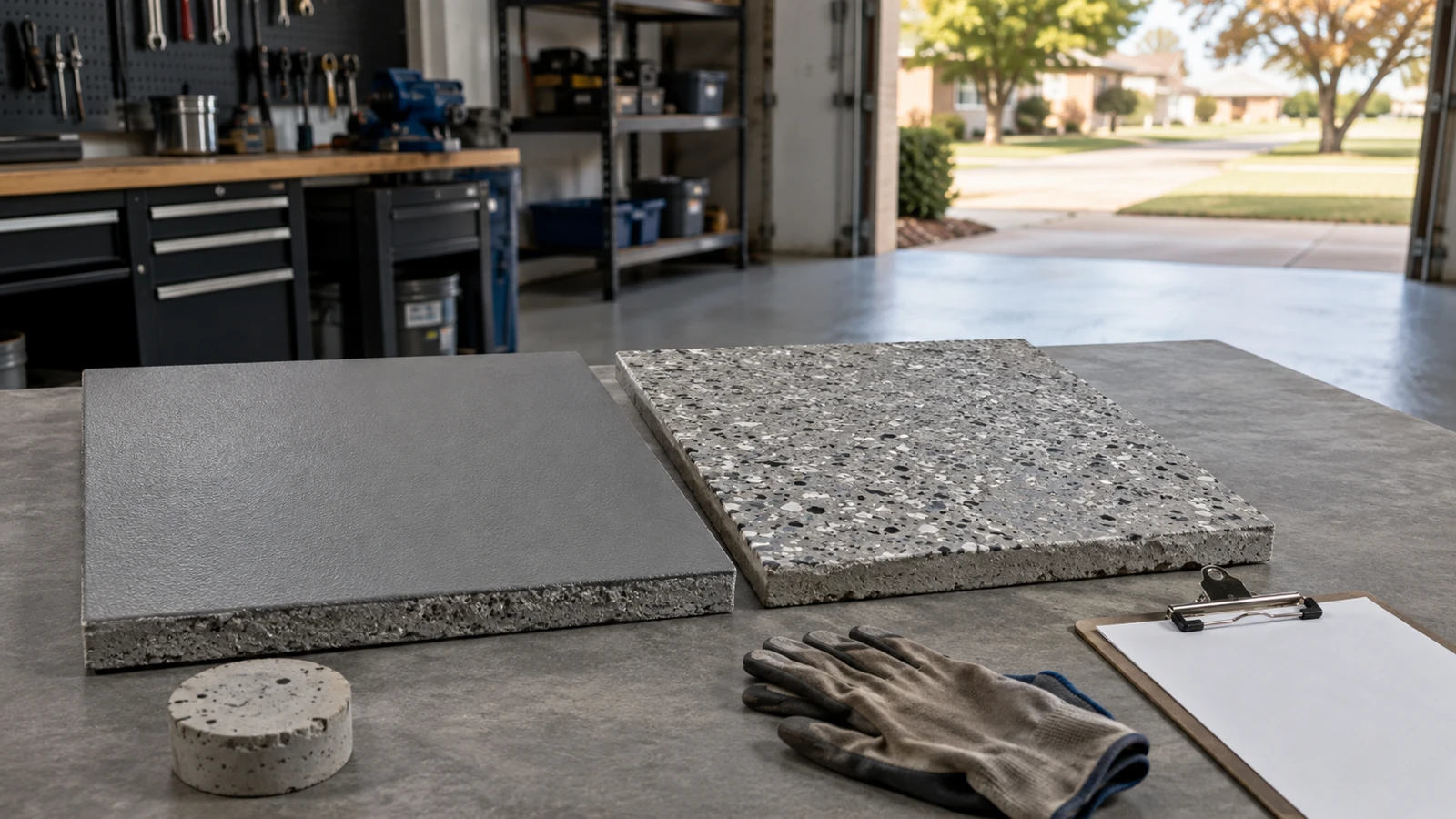
Quick answer: epoxy and polyurea are both resin systems used on concrete, but they are not interchangeable. The right system depends on your slab, moisture, exposure, and intended use.
Epoxy is generally more rigid. Some polyurea formulations cure faster and offer more flexibility, but performance depends on the specific product and manufacturer specifications. Where limited nonstructural slab movement is a consideration, greater flexibility may be relevant only when the product data and slab condition support it. Alliance Direct offers polyurea coating systems for residential floors, and the appropriate system depends on the slab, moisture, exposure, intended use, and selected product specifications.
Why Do McKinney Homeowners Keep Running Into This Question?
Search for garage floor coatings in North Texas and you will find epoxy and polyurea described in nearly identical marketing language, sometimes in the same sentence. They are related resin technologies, not the same product, and their differences can affect installation, return-to-service, flexibility, UV behavior, and long-term performance, depending on the formulation.
This guide covers what each material is, why moisture-driven soil movement in parts of North Texas makes flexibility worth understanding, why the concrete underneath matters as much as the coating, and what to ask before committing to a system.
What Is Epoxy?
Epoxy is a two-part resin system, a base and a hardener that react when mixed. It has been used on concrete floors for decades because it can form a durable, hard-wearing layer, and it remains a reasonable choice for many commercial and industrial floors. Two practical considerations are rigidity and UV exposure: epoxy is generally more rigid than elastomeric coating types, and many epoxy formulations can yellow, chalk, or fade under sustained direct sunlight.
What Is Polyurea?
Polyurea is also a two-part system, but it follows a different reaction pathway. The Polyurea Development Association defines polyurea as an elastomer derived from the reaction of an isocyanate component and a synthetic resin blend. Many polyurea formulations cure faster than standard epoxy and may offer greater flexibility. Actual cure time, working time, flexibility, and return-to-service schedule depend on the specific formulation, manufacturer specifications, and application conditions.
Not all polyurea performs the same way, and UV resistance is a good example. Polyurea chemistry ranges from fast-curing aromatic formulations, which can discolor under sustained UV exposure, to aliphatic formulations engineered to hold color in the sun. Which one a given product is depends on its formulation, not the word on the label, so the specific product matters more than the category name.
Why Does Flexibility Matter for Floor Coatings in North Texas?
Concrete slabs move. Many parts of North Texas have expansive clay soils, and movement in those soils is primarily associated with changes in moisture: they can swell as moisture increases and shrink as they dry, transferring stress to slabs above. A formulation with greater elongation may be better able to tolerate limited, nonstructural movement in an otherwise sound slab than a more rigid formulation, but that capability is product- and system-specific.
Flexibility is not a guarantee, though. A standard floor coating system, polyurea included, should not be treated as a structural crack repair or expected to solve active structural slab movement, such as a working crack or a settling foundation. Any ability to tolerate limited nonstructural movement depends on the slab condition, crack treatment, complete system design, and product data. Structural problems should be evaluated and addressed before coating.
For residential floors, Alliance Direct offers polyurea coating systems. The appropriate system depends on the concrete condition, moisture, intended use, environmental exposure, preparation requirements, and selected product specifications.
Why Does Surface Preparation Matter for a Lasting Floor Coating?
Here is a part that gets skipped in most online comparisons: how the concrete is prepared is one of several factors that determine how long a coating lasts, regardless of whether that system is epoxy or polyurea.
ASTM International’s D4259 standard covers surface preparation of concrete before coating and is intended to create a surface profile while removing foreign material and weak surface laitance. Depending on slab condition and system requirements, mechanical abrasion may include methods such as diamond grinding.
Moisture matters too. ASTM International’s D4263 standard describes the plastic sheet method for indicating capillary moisture in concrete before coating. It is an indicator method, so the moisture-evaluation plan still needs to fit the selected coating system.
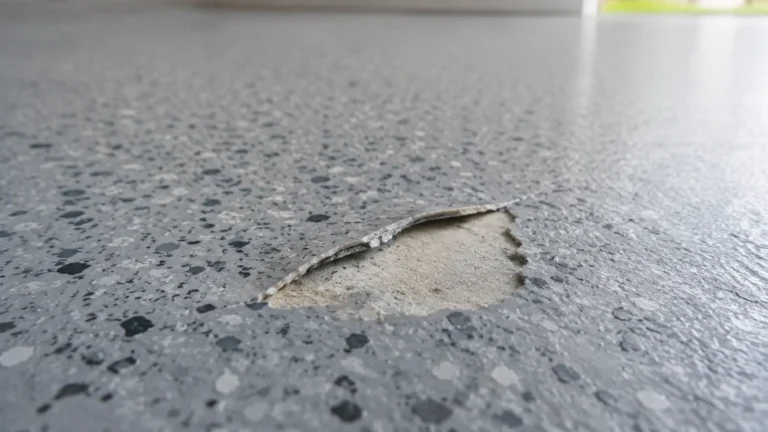
None of that depends only on which material ends up on top. Even a premium coating can fail when applied over improperly prepared concrete or moisture conditions that are incompatible with the selected system, because problems can begin at the bond line, not the topcoat.
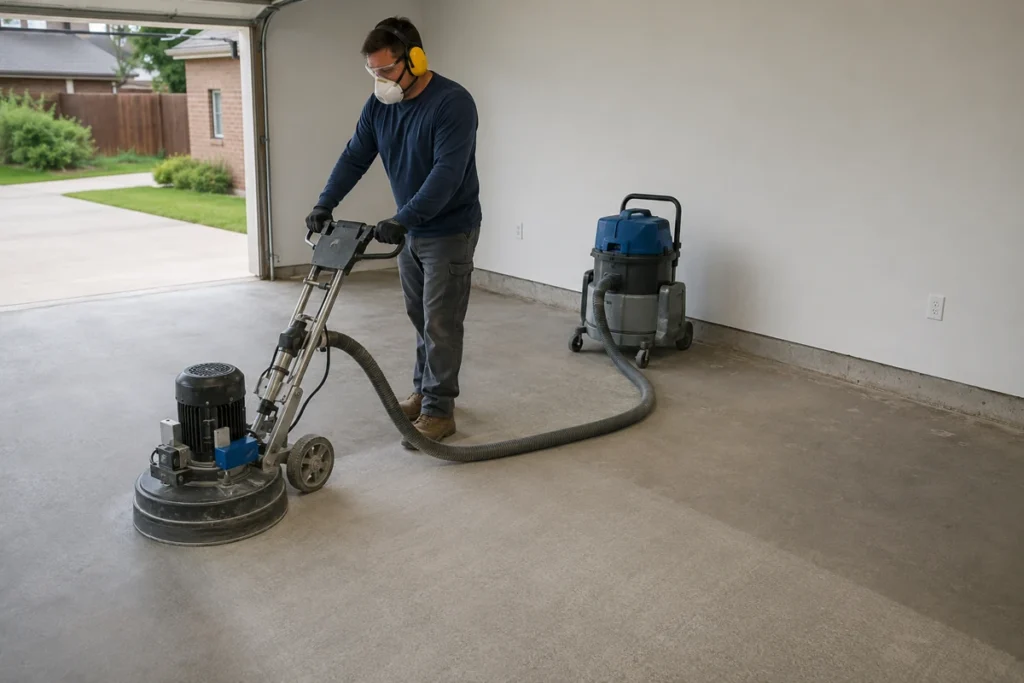
Long-term performance depends on the complete combination: an accurate concrete assessment, moisture evaluation, proper preparation, compatible product selection, correct mixing and application, and suitable environmental and cure conditions.
Ask about surface preparation and the complete installation process, not just the brand name on the product.
Matching the System to the Space
The comparison does not end with chemistry; priorities shift with the space.
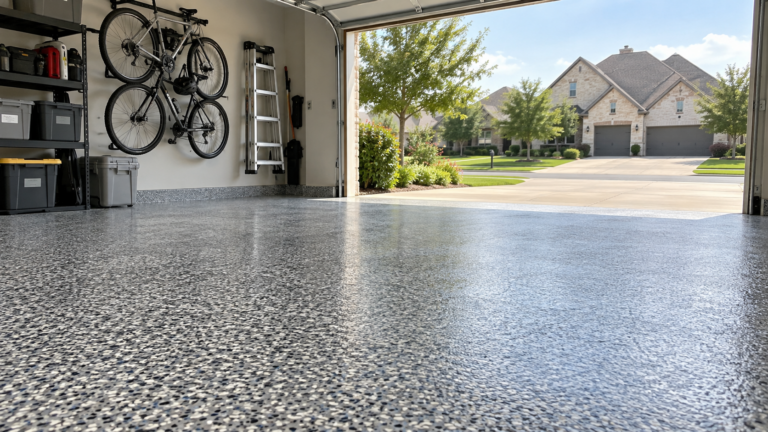
Residential garage systems should be selected for hot tire contact, everyday chemical exposure such as oil and coolant, anticipated traffic, and maintenance expectations. Flexibility may also matter when it is supported by specific product data and the condition of the slab.
Patios and other outdoor concrete that receive sustained weather exposure may face direct sun, rain, and temperature swings, so verified UV and exterior-use performance matter.
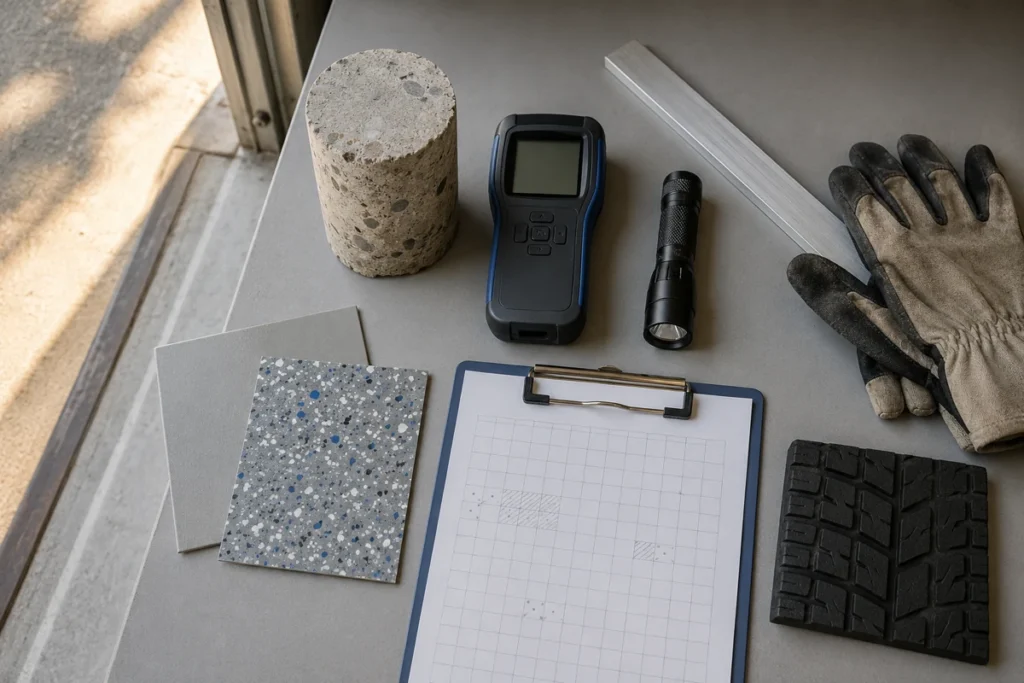
Commercial and industrial floors, including warehouses, showrooms, and kitchens, often prioritize traffic, abrasion, chemical exposure, slip resistance, and downtime constraints over appearance. Polyurea systems may be considered for cure speed or flexibility, but the specific product data and intended use should support those properties.
Match the system to how the space is used, and confirm the data sheet supports the claim being made, rather than assuming every product in a category performs identically.
What Questions Should You Ask Before You Commit?
✓ What specific product is going into my floor, and does its data sheet support what I am being told?
✓ How will the concrete be tested for moisture before work starts?
✓ What does surface preparation actually involve on my slab?
✓ How does this product perform under direct sun, if my space gets it?
✓ What is the realistic cure and return-to-use time in current weather?
A contractor who answers clearly, and who will show you a data sheet rather than just a category name, is generally taking preparation seriously.
Choosing the Right System for Your Project
We work with polyurea coating systems across residential and commercial projects in McKinney and the greater DFW area, and material selection starts with the slab in front of us, not a default product. For garage floor coatings , that means assessing surface-preparation requirements, moisture conditions, and how the garage will be used. The same approach carries over to patio and outdoor coatings , where sun and weather exposure must be considered, and to commercial and industrial flooring , where traffic, abrasion, chemical exposure, and safety requirements can take priority.
Still working through what makes sense for your space? Our FAQ page covers questions homeowners often ask before booking an estimate.
About Alliance Direct Services
Alliance Direct Services is a McKinney, Texas-based coating contractor serving residential and commercial clients across the DFW metro, including McKinney, Frisco, Allen, Plano, and Prosper. The company provides garage, patio and outdoor, and commercial and industrial floor coating services, with preparation and material selection based on each floor’s condition and use.
If you are deciding between systems for a garage, patio, or commercial space, the most useful next step is an on-site look at the concrete, its condition, how the space will be used, and its weather exposure.
CONTACT ALLIANCE DIRECT SERVICESFAQ
Is polyurea better than epoxy?
Neither is universally better. Some polyurea formulations cure faster than standard epoxy and may offer greater flexibility, but those characteristics must be confirmed for the specific product. Epoxy remains a durable, widely used material in commercial and industrial settings. The right choice depends on the space, the slab, the complete coating system, and the product’s technical data sheet.
Does Alliance Direct use epoxy or polyurea on residential floors?
Alliance Direct offers polyurea coating systems for residential floors. The specific system selected depends on the concrete condition, moisture, intended use, environmental exposure, preparation requirements, and applicable product specifications.
What should I consider when choosing between epoxy and polyurea for my floor?
Start with how the space is used, its sun and weather exposure, and the concrete’s condition, including any cracks or moisture concerns. Then ask what surface preparation and moisture evaluation the contractor plans to do, and request the technical data sheet for the specific product proposed so you can compare cure schedule, elongation or flexibility, UV performance, and exposure limits.
Why does UV resistance matter for a garage or patio floor?
Garages and patios that receive sustained direct sun can expose a coating to UV for long periods, especially in summer. Products without suitable UV performance may yellow, chalk, or fade over time. UV performance depends on the product’s formulation, so it is worth asking about rather than assuming.
Does a flexible coating mean it can cover a cracked or moving slab?
Not on its own. Depending on the product and complete system, a more flexible coating may better tolerate limited nonstructural movement in an otherwise sound slab, but it should not be treated as a structural crack repair or expected to solve active structural movement, such as a working crack or a settling foundation.
How much does surface preparation affect how long a coating lasts?
It is one of the most important factors, but it works alongside several others. ASTM D4259 addresses creating a concrete surface profile and removing weak or foreign material before coating, while ASTM D4263 provides an indicator method for capillary moisture. A high-quality coating can still fail over improperly prepared concrete or moisture conditions that are incompatible with the selected system, but preparation is part of a larger process that also includes assessment, product selection, mixing, application, and cure conditions.
What causes garage floor coatings to peel?
Peeling can trace back to several causes: inadequate surface preparation, unresolved moisture, product incompatibility, incorrect mixing, or application outside the manufacturer’s recommended temperature and cure conditions. It is rarely just one factor.
Does the same coating system work for garages, patios, and commercial floors?
The underlying chemistry may be related, but priorities shift by use: garages weigh hot tire and chemical resistance, patios weigh outdoor UV and weather exposure, and commercial floors often weigh chemical resistance, traffic and abrasion demands, and slip resistance.
How can I tell if a contractor is taking preparation seriously?
Ask how they test for concrete moisture, what their surface grinding process looks like, how they handle cracks or old coatings, and whether they can show you the technical data sheet for the specific product going on your floor.